 By Lucy Vale
How to write a cover letter - what it's actually for, and the four paragraphs that do the job
Most advice on how to write a cover letter skips the truth that changes everything: it's read second, after your resume, usually to answer a question your resume raised. Here's what a letter is actually for, the four-paragraph structure practitioners endorse, and the classic rules you can safely ignore.
Almost every guide on how to write a cover letter starts with the format. It skips the one fact that changes what you should write: your cover letter is read second. Hiring managers in many fields describe the same habit. They read the resume first. They open the letter only if the resume was close enough to be interesting, or strange enough to raise a question. In one online hiring discussion, an HR director put it simply: a good cover letter can move an 8-out-of-10 candidate to an 8.5. It will not make an average application great.
That sounds discouraging. It is actually good news. A letter mostly helps when two candidates are close, so it works like a tiebreaker. And almost nobody writes a real one — most people either skip it or just re-type their resume as paragraphs. So a short, specific letter puts you in rare company. One hiring manager in government told a story like this: he was reading a stack of applications with unusual work histories, asking on each one why the person had applied. The only four people who had written a letter that answered that question became his only four interviews. That is one story, not a statistic. But it shows how a letter works when it works.
What a cover letter is actually for
One rule builds the whole letter: say what the resume can't. Hiring managers describe it the same way across forums. The letter is your pitch; the resume is the proof. Tell them the reasons to hire you that they will not find on the next page. So a letter that just repeats your resume has no job to do — and repeating the resume is the mistake hiring managers complain about most.
Here is what the resume can't say, but a letter can:
- Why this job, this company — but only if you have a true, specific reason.
- How you work — one real story that shows a trait instead of just claiming it. "Great attention to detail" is a claim; "I proofread the 200-page proposal that won the grant" is proof.
- The answer to the question your resume raises — a gap, a career change, a move to a new city, or an unusual path. This is the one case where hiring managers really want the letter. An unexplained oddity often gets a fast "no," while two sentences of context keep you in the running. (We cover the hardest version of this — writing a cover letter with no experience — separately.)
- That you can write — some readers use the letter only as a writing sample, especially for jobs that involve writing.
If none of these apply — your resume raises no questions and you have nothing specific to say — a short, simple letter is fine. In some industries you can skip it (more on that below).
How to write a cover letter, paragraph by paragraph
The shape most hiring managers recommend is three to four short paragraphs, well under a page. What to include in a cover letter, in order:
- Name the job, plainly. "I'm writing to apply for your [X] position" is fine — you don't need a dramatic opening. If you have a real hook (a referral, or a product you actually use), put it here. If you don't have one, don't fake it. The opening line has its own traps, so we cover how to start a cover letter separately.
- The one thing the resume can't say. This is the main paragraph — one real story, or one trait with proof, aimed at this job. Here is the test: could another applicant send this exact letter? Could you send it to another company without changing it? If yes, it isn't done. That is the whole point of tailoring a cover letter to the job, and it's about four sentences of work, not a full rewrite.
- Answer the resume's question — only if it raises one. A gap, a career switch, a move: two or three sentences, and no apology. If your resume raises no question, this paragraph doesn't exist. Cut it.
- Close in one line. Show interest, note that you're available, and stop. Don't write "I'll call next week to schedule an interview." Candidates don't schedule interviews; employers do, and that line reads as pushy, not confident. The endings that work — and the habits to drop — are in how to end a cover letter.
Tone: warm and natural — like writing to a colleague you like but don't know well. Write the way you speak. Stiff, formal language only fits truly formal fields, like law or parts of government. Everywhere else it reads like a template.
Keep it short. Most readers spend very little time on a letter — in a survey of 625 hiring managers, over a third spent under 30 seconds and most spent under two minutes. A full page is the limit, not the goal. There's a lot of folklore about length, so we cover how long a cover letter should be on its own.
The classic cover-letter rules you can safely ignore
Much of the standard cover-letter advice gets copied from guide to guide, even though few hiring managers actually support it. Here are the rules you can drop, according to the people who really read letters:
- Hunting down the hiring manager's name. "Dear Hiring Manager" is completely fine — no reasonable reader minds, and the time you'd spend searching is better spent on the main paragraph.
- The postal-address header block. This comes from paper mail; no one on the hiring side expects it now. (The formatting that does still matter — file type, a header that matches your resume, fields you paste into — is in cover letter format.)
- The "creative" opener. Forced stories and "Picture this:" openings annoy readers far more often than they impress them.
- The full-page rule. As above, shorter letters get praised more often.
- The salesy superlative. "You won't find a better candidate" — you can't know that, and readers know you can't.
When to skip the cover letter
Here is something the mainstream guides won't tell you: whether letters get read at all depends heavily on the industry. Law, healthcare, education, government, and smaller companies tend to be traditional, so letters are often expected and read. Big tech often goes the other way. Hiring managers at large tech companies frequently say they have never read one, and some application systems barely show them. If the letter is optional, the field is high-volume tech, and your resume raises no questions, then skipping it is a fair use of your time. If the posting requires a letter, or your resume needs explaining, write a real one.
A word about the numbers: you'll see confident statistics on both sides. One survey of 625 hiring managers found 83% "always" or "frequently" read cover letters; other surveys, and many hiring managers on forums, say they rarely do. Most of these are surveys run by resume-tool companies, and they don't agree. The honest answer is the one above: it depends on the industry. In high-volume tech, assume the letter may not be read; where letters are expected, assume it will be — and make the rare genuine one count.
Writing it faster
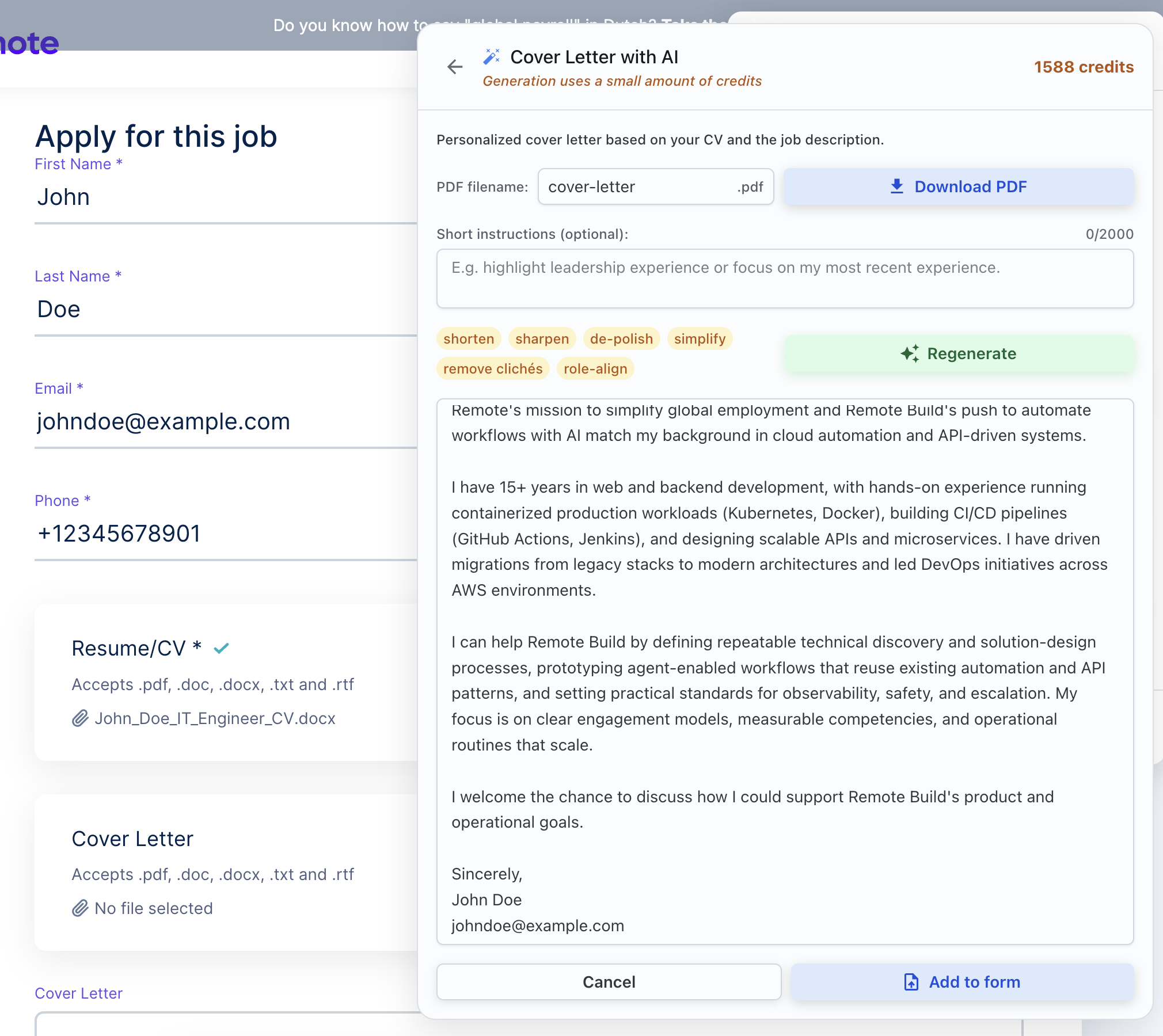
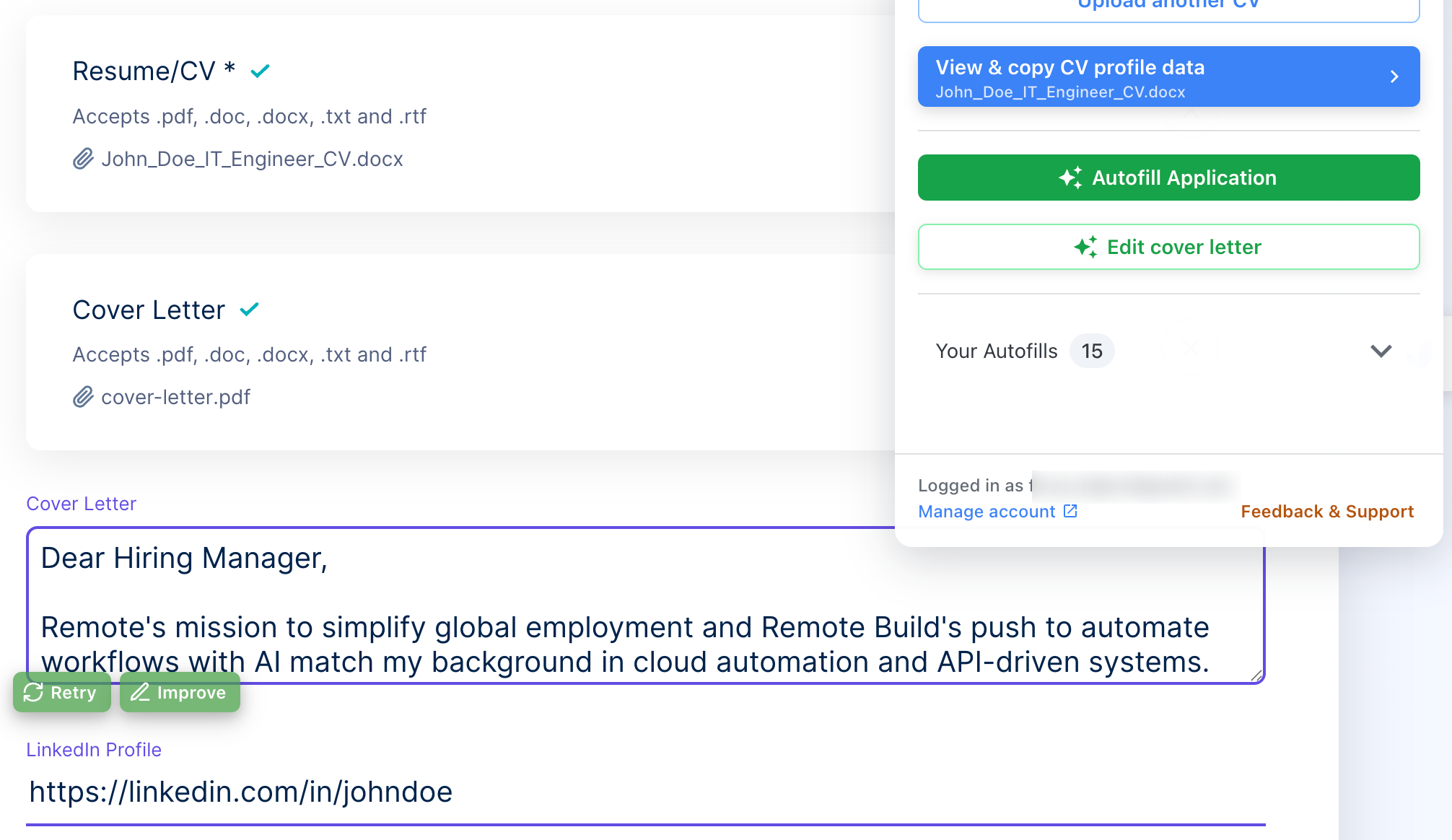
The structure above is small on purpose: name the job, write the one paragraph only you could write, answer the resume's question, close in one line. The slow part is the middle — finding the story and saying it well for this role. That part is yours. The rest doesn't have to be. An AI cover letter generator that works from your CV and the job description can write the first draft, with your real details in place, while you're on the application page. And using AI to write a cover letter properly — real inputs in, real edit after — is a workflow, not a way to skip the four paragraphs.
When we built ApplyBtn's cover-letter generator, we made it open with a concrete achievement from your CV and build the body as a single argument tied to the posting — not a re-typed resume — because a letter that only repeats the resume is the one letter with no job to do. The draft still has to pass the test no tool can pass for you: could anyone else have sent it?