 By Lucy Vale
How long should a cover letter be - the ceiling everyone mistakes for a target
How long should a cover letter be? Three to five short paragraphs, 250-400 words, half to a full page - and one page is the ceiling, not the goal. Where those numbers come from, the two fields that break the rule in opposite directions, and why length is a bet that can only lose.
The short answer: three to five short paragraphs, about 250 to 400 words, roughly half a page to one page — and one page is a hard limit, not a goal. If you remember one thing, remember the last part. The most common mistake with length isn't writing too little. It's padding a good half-page letter out to a full page because the page "looked empty."
Where the numbers come from
The clearest advice comes from someone who actually hires: Alison Green of the blog Ask A Manager, in her post how long should a cover letter be. Her rule is simple — one page is usually about right, and half a page often isn't enough to make your case. She adds the point most word-count articles skip: don't write more just to reach some word count, because that's "a recipe for a bad letter." The best way to think about length isn't a number at all. In her words, the right length is "the amount of space that it takes to explain why you're an unusually strong candidate for the job aside from what's on your resume." For most people, that's a few hundred words — roughly a page or a little less.
People in tech hiring often want even less. On IT and engineering forums, recruiters and hiring managers say half a page is enough, and one page is the most they'll accept. A longer letter, they say, looks like you can't decide what matters — and in a pile of dozens, it just gets skipped. This fits how little time a letter usually gets: even when someone does read it, they skim. A second page isn't rude; it simply won't be read.
You'll also see very exact-sounding numbers online — "83% of hiring managers read cover letters," or "recruiters spend 7.4 seconds." Be careful with these. The read-rate surveys mostly come from companies that sell resume services, and they don't even agree with each other. The "7.4 seconds" figure comes from an eye-tracking study of resumes, not cover letters — blogs just copied it onto the wrong topic. The honest takeaway is simpler: assume your letter gets skimmed, and write for a skim.
The exceptions run in both directions
The right length depends on your field, and there are two clear exceptions that pull in opposite directions:
- Academia wants more. People on academic hiring committees often say a half-page letter looks too thin, while a two-page letter is normal. An academic cover letter is a different kind of document doing a different job.
- High-volume tech barely wants one. In fast, high-volume hiring, recruiters say they only read the letter when the resume leaves them unsure. There, half a page is plenty — and sometimes skipping the letter altogether is the smart move, which we cover in how to write a cover letter.
If you're not in one of those two situations, the 250-400 word range is your default.
Length is a bet that can only lose
Here's the point that "aim for 3 to 6 paragraphs" advice misses. A cover letter can only help you a little: at best, it's a tiebreaker that gets read when a hiring manager is unsure about you. But a long letter can hurt you in several ways — obvious filler, a wall of text nobody reads, and the "can't decide what matters" signal of a second page. All of those get worse the longer you write. So the smart choice is the shortest letter that makes one clear point. Every extra sentence adds risk and gives you nothing back.
This also tells you what to cut first: anything that just repeats your resume. Hiring managers say the most common weak letter is a work history retold as paragraphs — more words, but no new information. If a sentence tells the reader something your resume already says, it isn't making the letter richer; it's only making it longer. What should go in the space you keep is covered in how to start a cover letter (two sentences) and the core-paragraph rule in the main guide.
Getting to short is the actual work
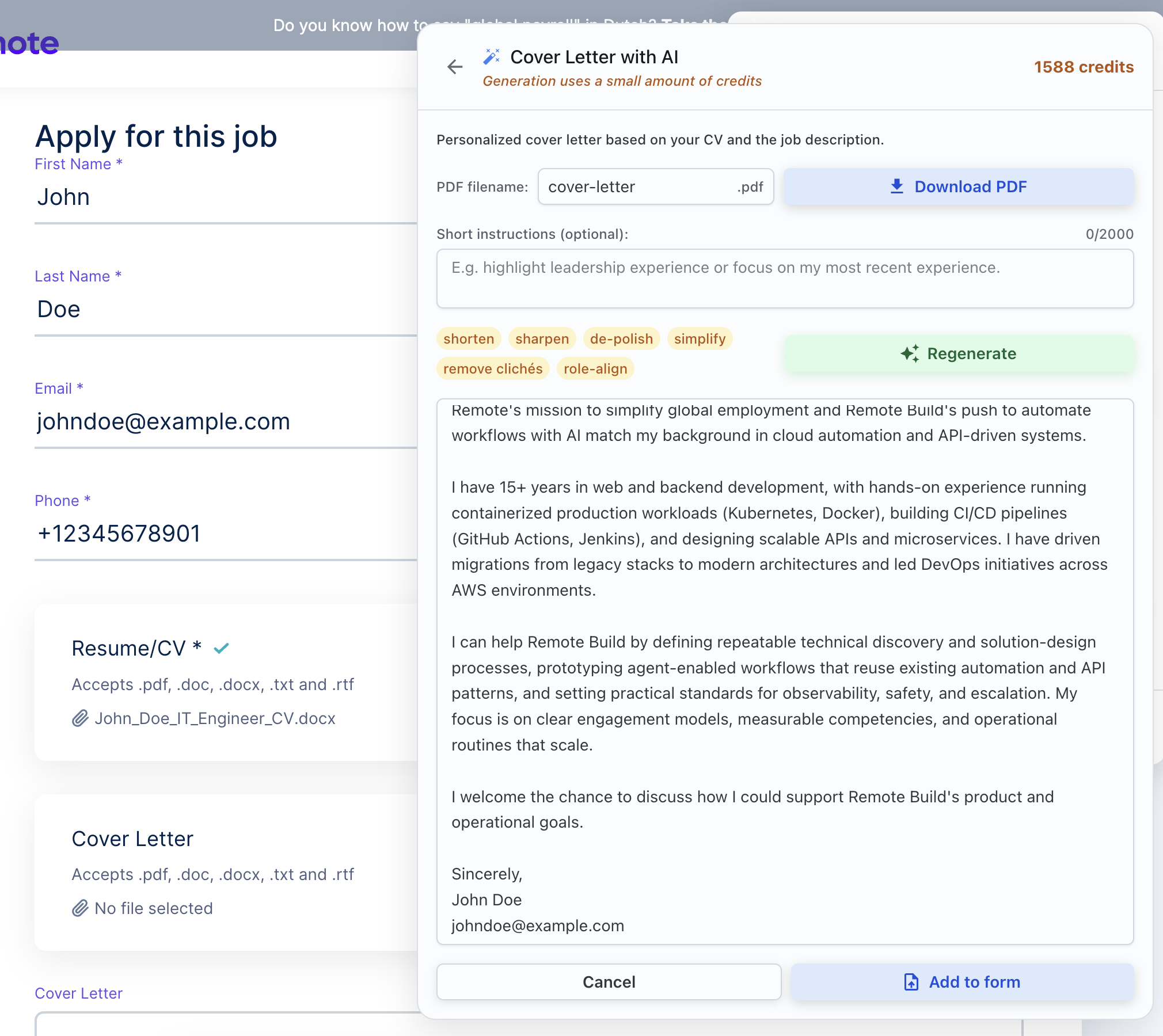
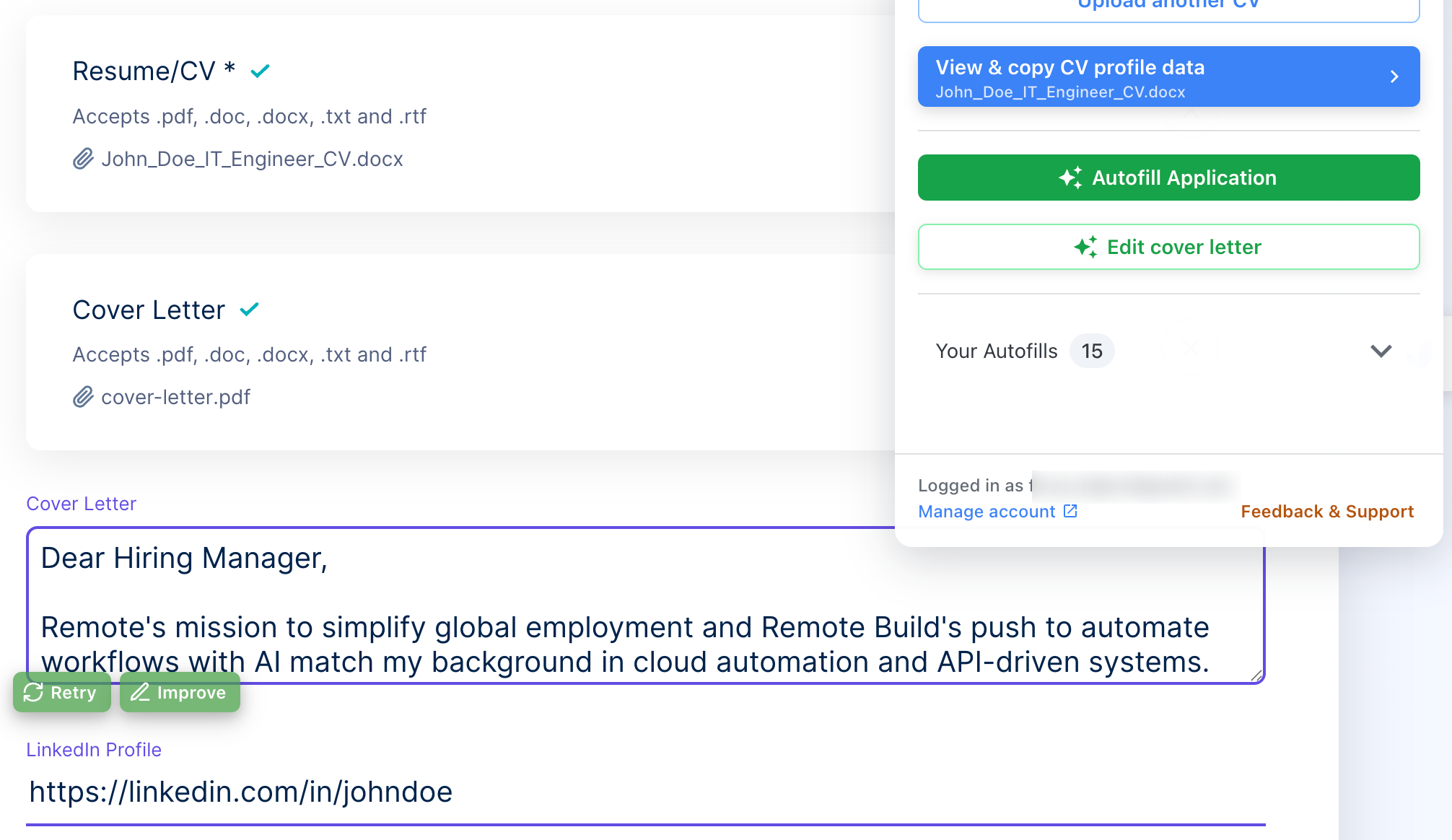
Anyone who has written a cover letter knows the strange part: the short one takes longer than the long one. Writing less means editing more, and editing is the slow work. This is one place AI really helps. An AI cover letter generator that drafts from your CV and the job description gives you a first draft you can keep short, and the refine step ("shorten it," "make it plainer") is made for exactly this kind of trimming. ApplyBtn's own generator is built this way on purpose — it writes a tight letter with one main point tied to the job posting, rather than padding to fill the page, and then you refine it. The part it can't do for you is the judgment call: when your draft makes three points, which single point do you keep? That choice is what decides whether your short letter is the right short letter.