 By Lucy Vale
How to start a cover letter - why the boring opener beats the clever one
Advice on how to start a cover letter pushes hooks, anecdotes, and bold first lines. The hiring managers who actually read letters endorse something else: a plain opener followed by one specific only you could write. Here's what survives the skim - and the openers that sink letters.
Here's the short answer, and it's a little deflating: the best opening line usually isn't clever. It's plain — and right after it comes one specific detail only you could have written.
Two facts explain why, and most "how to start a cover letter" lists skip both.
Your opener has to survive a skim, not win a contest. Plenty of recruiters say they skim cover letters fast, or skip them, and a lot of applicants never send one at all. So your first line has one job: get the reader to the second line.
Your opener isn't competing with silence. It's competing with a pile of near-identical letters, many of them now written by AI. Recruiters say they keep seeing the same templated first lines over and over. So your opening has to sound like a real person, quickly.
The opener everyone sends
"I am writing to express my interest in the [role] at [company]." If you've ever written a cover letter, you've probably typed this line. So has almost everyone else. It's the default first line of template sites, and it's what most AI tools produce when you don't edit them — career sites now flag it as a classic "written by a chatbot" tell. It isn't wrong. It's just invisible. The reader moves straight to the next paragraph, having learned one thing: that you used a template.
Its cousins do worse:
- "My name is…" — your name is already in the header and the application form. Career coaches say this opener reads as junior.
- "To Whom It May Concern" — old-fashioned enough that some reviewers treat it as an instant skip.
- "I have enclosed my resume for your review." — you're describing the mechanics of applying, which tells the reader nothing.
- "I'm probably not the best candidate, but…" — the self-torpedo. Never open with the reason to reject you.
- "I am thrilled to apply for this exciting opportunity at your esteemed organization." — the AI tell. Recruiters on hiring forums say unedited chatbot letters tend to open exactly like this.
How to start a cover letter that gets read
Alison Green of Ask a Manager — a former hiring manager and one of the most-read voices on cover letters — endorses openers the listicles would call boring. Her own list of good opening lines includes "I'm excited to apply for your X position" and "I'm writing to apply for your X position." Her point: if you think you need a creative or catchy hook, you don't. The real work happens in the sentence right after — why this job, specifically and truthfully. The letters she praises win by being personable and specific to the role, not by a clever first line.
So the recipe is two sentences, not one:
- A plain first line that names the job. No throat-clearing, no dictionary definitions, no staged anecdote.
- One specific, verifiable thing in the second line — a product of theirs you actually use, the concrete reason this role fits your last three years, or the result you'd bring to the exact problem in the posting. This is also the easiest way to sound un-generated: a chatbot can fake enthusiasm, but it can't know that you've run their onboarding flow or shipped the migration their posting describes.
Two honest variations:
- The result-first opener — for example, "I cut onboarding time by 30% at my last company, which is the problem your posting leads with." This works when the result genuinely maps to the job's stated need. It's a style, not a rule; a true "why this company" sentence does the same job.
- The referral opener — if someone pointed you to the role, name them, their role, and why, in sentence one. Just don't expect the name-drop alone to carry the letter; the referral itself is what helps.
If you're not sure what your specific detail should be, our cover letter examples by role collect one real opening move for each job family.
The salutation panic you can skip
Good news: "Dear Hiring Manager" is fine. Ask a Manager is blunt about it — "Dear Hiring Manager" is absolutely fine, and no reasonable hiring manager will care if you don't hunt down their specific name. A real name is a small plus if you're sure of it, but a wrong name is worse than no name. The time you'd spend digging for it is better spent on your second sentence. Only two salutation mistakes really register: "To Whom It May Concern" (dated), and the leftover template bracket — recruiters do report getting letters addressed to "[Recipient Name]". So proofread the one line you pasted in.
The opener is a satellite; the letter is the planet
A strong first line only buys you the next paragraph — nothing more. What the reader actually wants, according to the hiring managers themselves, is the middle: the one thing your resume can't say, aimed at this job. That's the real point of how to write a cover letter in the first place.
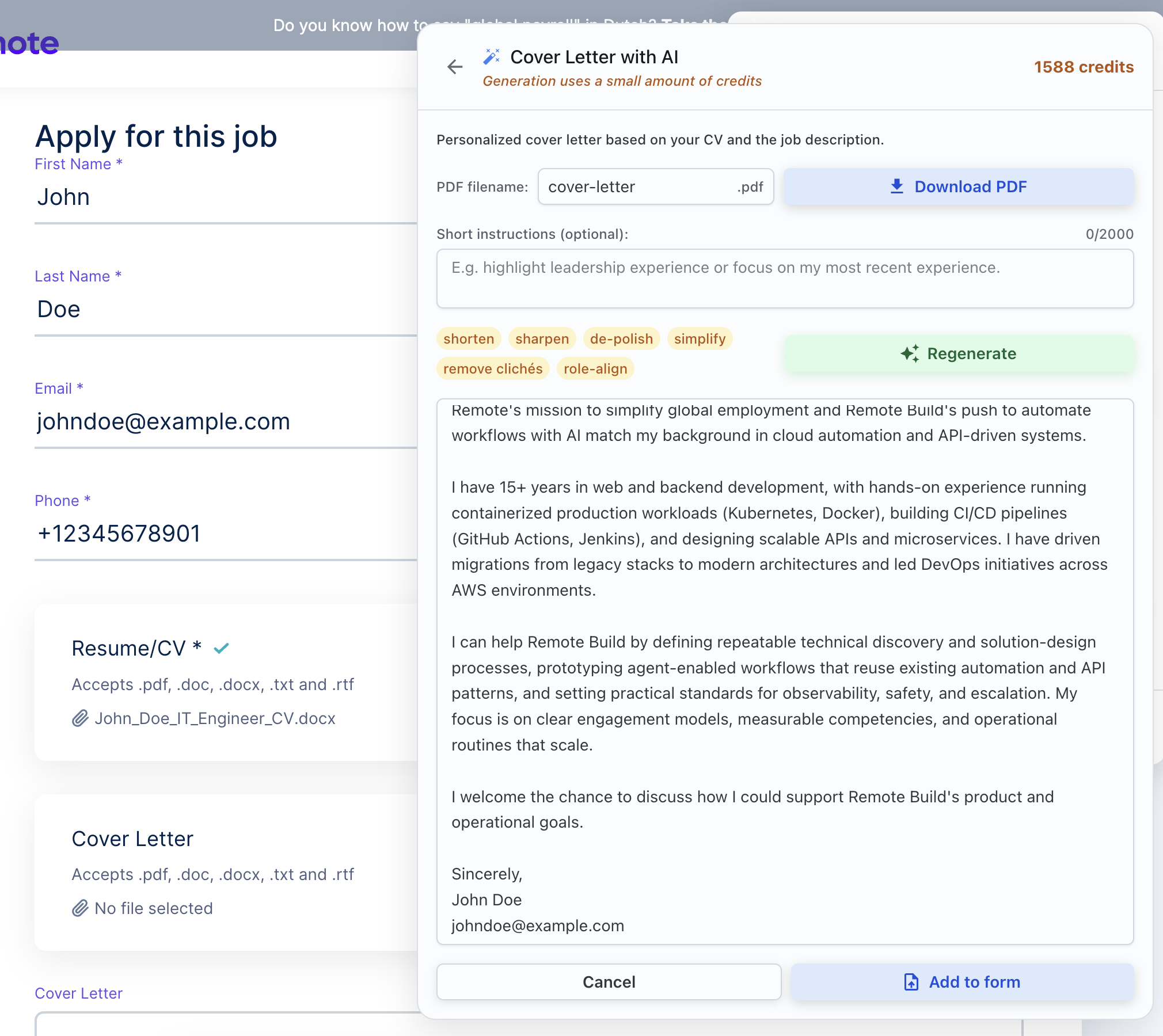
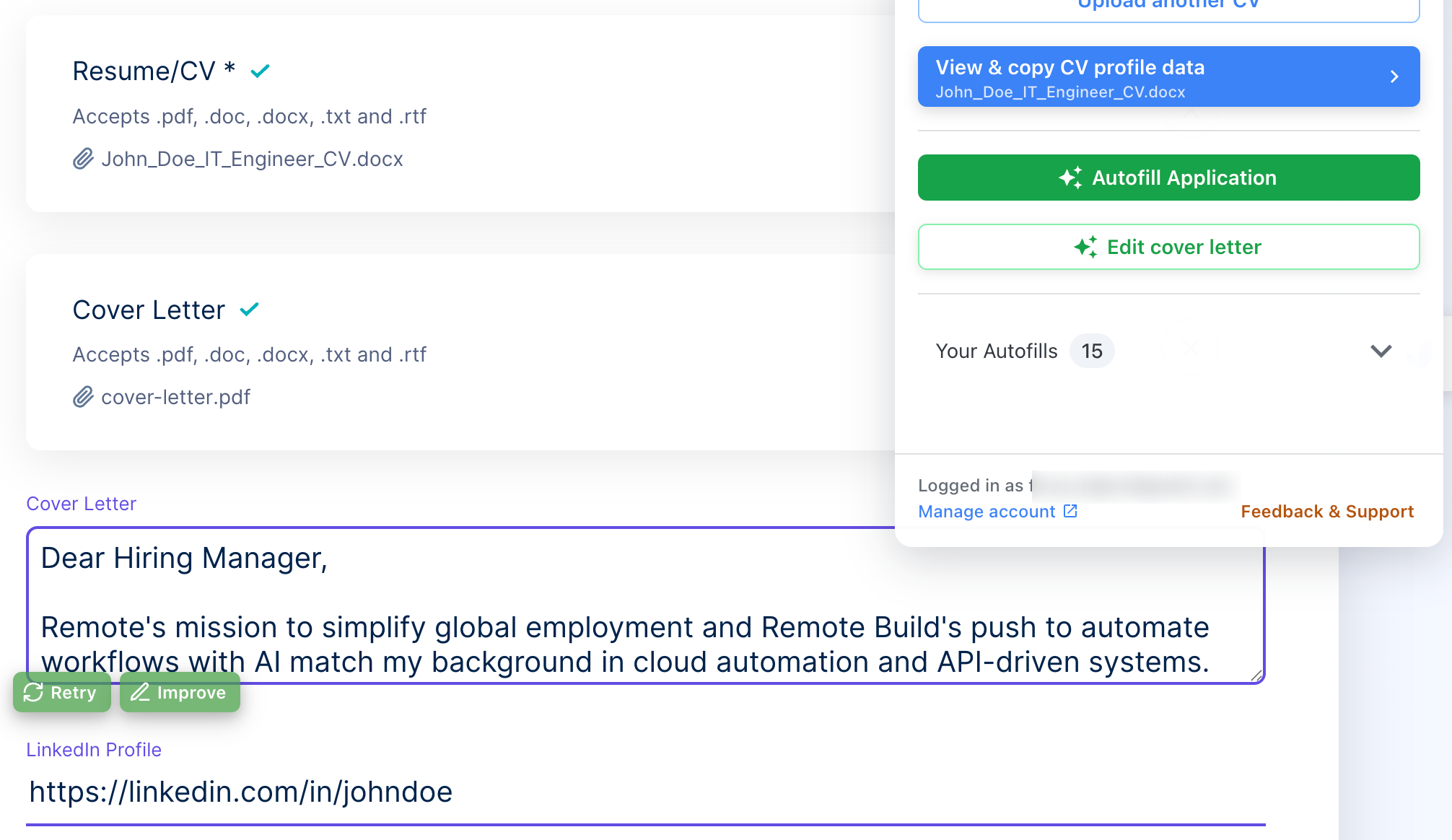
If the draft already exists but the opener is the generic one, an AI cover letter generator that starts from your CV and the job description can hand you a first line that already has the role and your background in it — which you then rewrite in your own voice. ApplyBtn built its generator to lead with a concrete, role-relevant achievement instead of "I am writing to express my interest" or generic company praise, because that opener is exactly the kind readers skim past.
However you begin, the ending has its own single trap to avoid — how to end a cover letter covers it in two minutes.