 By Lucy Vale
How to end a cover letter - the one closing that backfires, and the formula that's fine
Nobody ever got hired because of a closing paragraph. How to end a cover letter is mostly about not spoiling a good letter: one line on why you fit, a simple thank-you, a normal sign-off - and one old-fashioned move to never use.
Here's the short answer: how you end a cover letter matters very little. When you read what recruiters and hiring managers say online, they hardly ever talk about closings. They complain a lot about weak openers, generic letters, and AI writing that all sounds the same — but almost never about the last few lines. Nobody says they moved a candidate forward because of a great ending, and only one closing move gets flagged as a real mistake.
So think of the closing as a floor, not a ceiling. Its only job is to not spoil the good letter above it. That makes it the part you should spend the least time on — the opposite of what those "7 powerful closings that land interviews" articles want you to believe.
How to end a cover letter in three sentences
Aim for two to four sentences, under about fifty words:
- One line that reminds them why you fit. Point back to the single strongest reason you're right for the job. Don't add new skills here, and don't summarize the whole letter. The best letters end by returning to this role, not with fancy words.
- One line of thanks. "Thank you for your consideration. I look forward to hearing from you." Yes, that plain line is fine — more on this below.
- A normal sign-off and your name.
As a block:
If the rebuild of your help center is the priority the posting suggests, that's the exact work I've spent the last two years doing — I'd love the chance to talk about it.
Thank you for your consideration.
Best regards, Ana Torres
Want to sound a bit warmer? "I'd love the chance to talk about how I could help with X" — an invitation, not an appointment.
"Thank you for your consideration" is not a cliché to kill
Lots of cover-letter articles call the plain thank-you a tired cliché and tell you to replace it with a "powerful call to action." The hiring side doesn't agree. Recruiters who give advice online often suggest exactly this ending: "Thank you for your consideration. I look forward to hearing from you." Even Robert Half, a large recruiting firm, lists it as an acceptable professional close. A polite phrase at the end of a letter is just normal manners, like "Sincerely" — it's expected, and it does its job by not drawing attention. In your opening line, a forgettable sentence is a problem, because the reader still has to keep going. At the very end, forgettable is fine. That's the whole point.
The "strong call to action" idea — something like "I'd welcome a 30-minute call to walk you through my launch playbook" — comes from career coaches, not from the people who actually hire. In the hiring-side discussions we read, no one said a line like that ever changed their decision.
The one closing that backfires
"I will call your office next week to schedule an interview." This is old advice from the days of mailed paper letters, when it was meant to show drive. Today it's the one closing that hiring people warn against. You don't schedule the interview — the employer does. So the line sounds pushy, not confident. The same goes for telling them when to reply, making demands instead of requests, or offering your salary or availability when nobody asked.
Two milder versions of the same mistake. First, a closing that adds brand-new skills or facts — those belong earlier in the letter, or nowhere. Second, a long, five-line formal goodbye that turns a short, sharp letter back into a template. And skip the begging — "I know you're very busy, but…" — it just hands the reader a reason to say no.
Sign-offs: stop thinking about it
"Sincerely," "Best regards," "Best" — all fine. We found no sign that the choice between them changes anything. Pick one that matches the tone of your letter and move on. The only real risk is a very casual sign-off ("Cheers," "Thx") in a formal industry like law or banking. That's a matter of manners, not a proven reason for rejection — but it's an easy one to respect.
You'll also see confident numbers on this topic — like "83% of hiring managers expect a professional closing." We couldn't trace numbers like that to any real study. Treat them as decoration on pages that are selling you templates.
Spend the reclaimed minutes where the letter is actually won
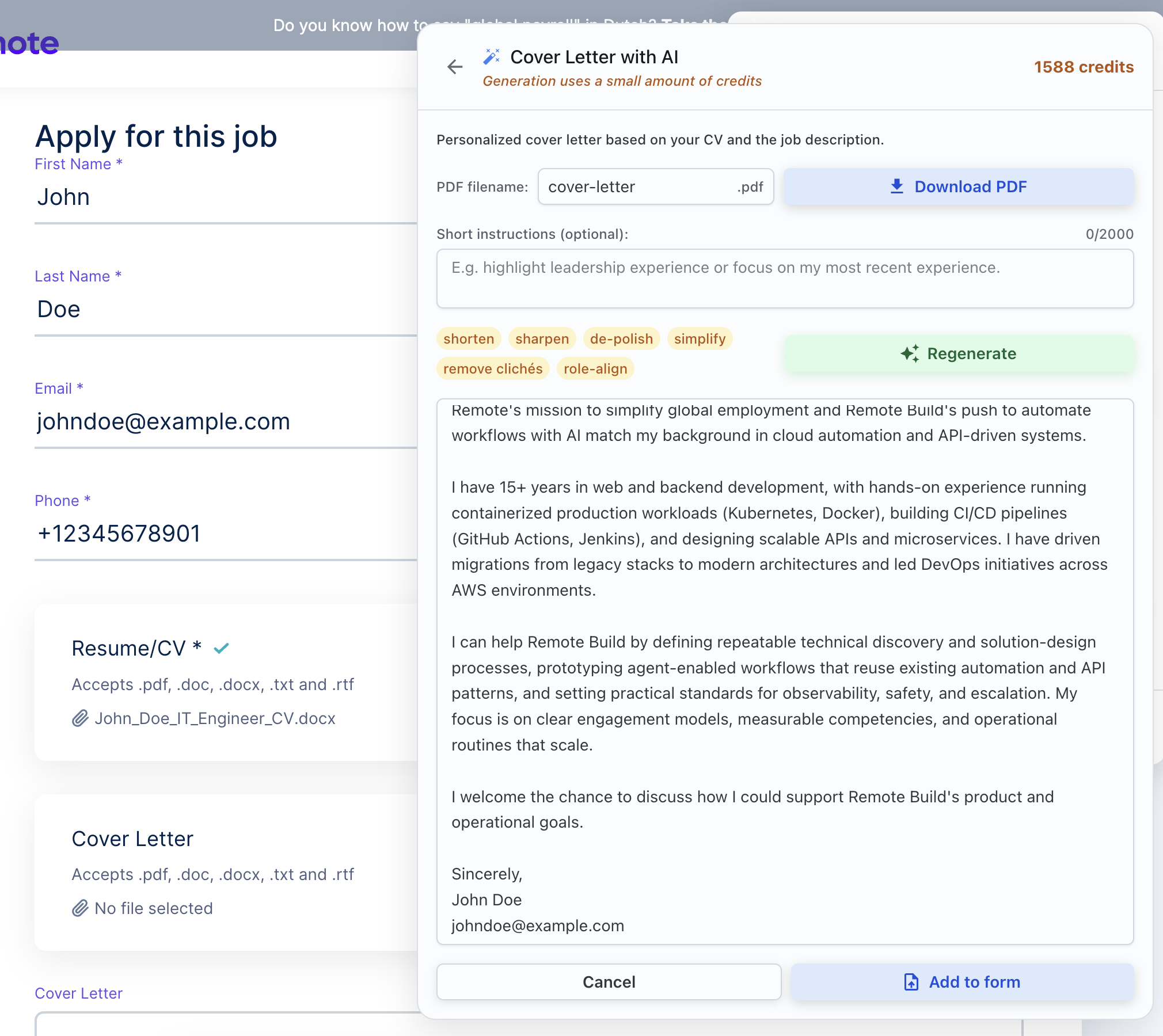
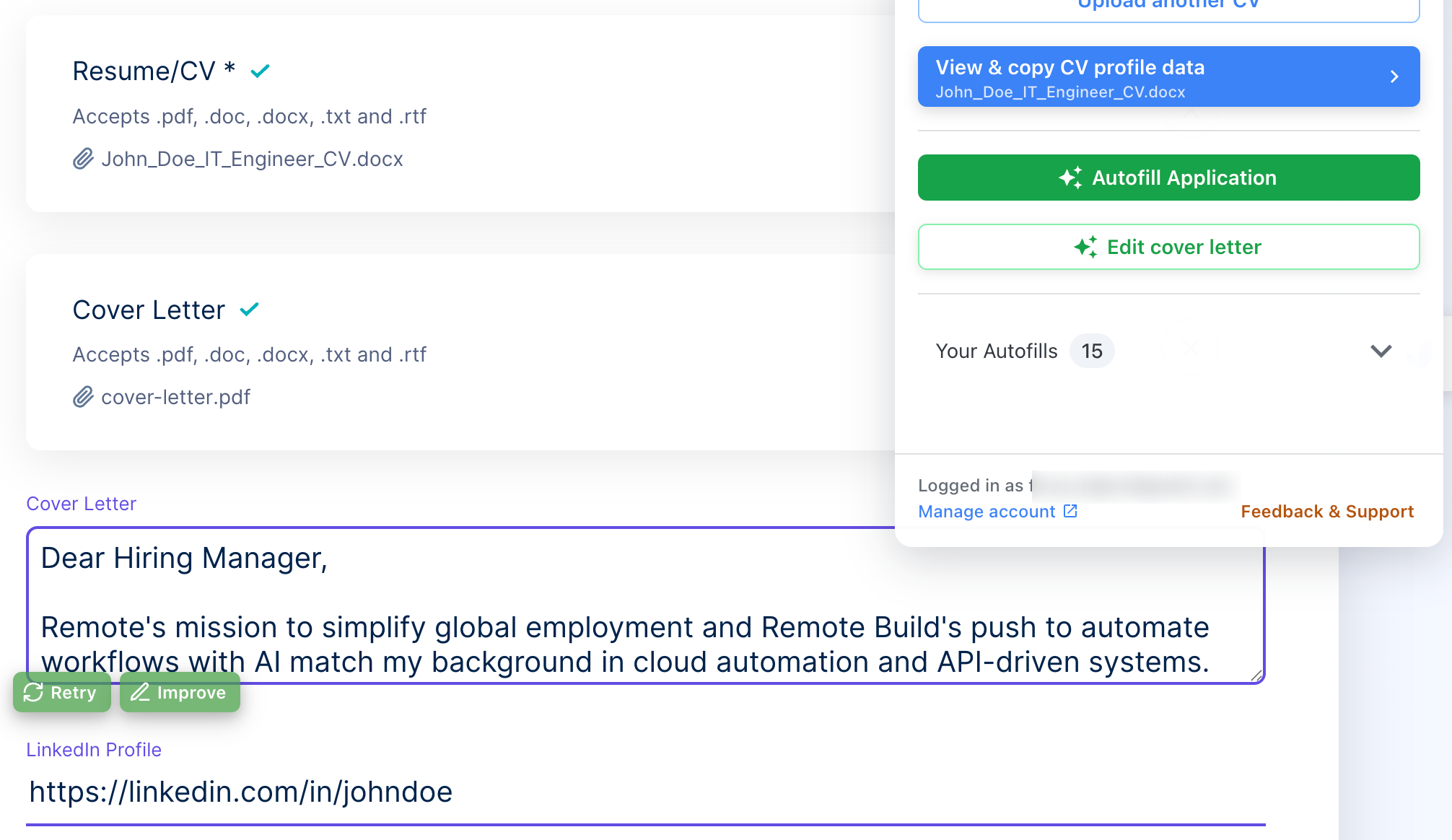
If the closing is the floor, the middle is where you win. That's the one paragraph only you could write, aimed at this exact job — the heart of how to write a cover letter. The opener decides whether the reader keeps going (how to start a cover letter shows why plain beats clever there). If you'd rather have the shape — opener, middle, close — set up for you so your energy goes into that middle paragraph, an AI cover letter generator that works from your CV and the job description drafts the whole letter with your real details already in place. Every draft it writes ends politely — and no letter, written by you or by a tool, should end with a promise to call.