 By Lucy Vale
How to automate job applications with AI (without the spray-and-pray)
Automating job applications splits into a part that's genuinely worth handing to AI and a part that quietly wrecks your results. Here's how to tell them apart - and automate the job application process without turning yourself into spam.
Apply to more than a handful of jobs and the same thought arrives: there has to be a way to automate this. There is - but "automate job applications" isn't one thing. It splits into a part that's genuinely worth handing to AI and a part that quietly wrecks your results, and most tools sell you the second one. This is how to tell them apart, and how to automate the job application process without turning yourself into spam.
What it actually means to automate job applications
Applying to a job is really three jobs stitched together: finding roles worth applying to, filling in the application - the same details and the same open-ended questions, over and over - and actually submitting it. AI can automate each of the three, but they are not equally safe to hand off.
- Finding. Matching tools scan postings and score how well each fits your background. Useful, but their shortlist still needs your judgment before anything goes on the pile.
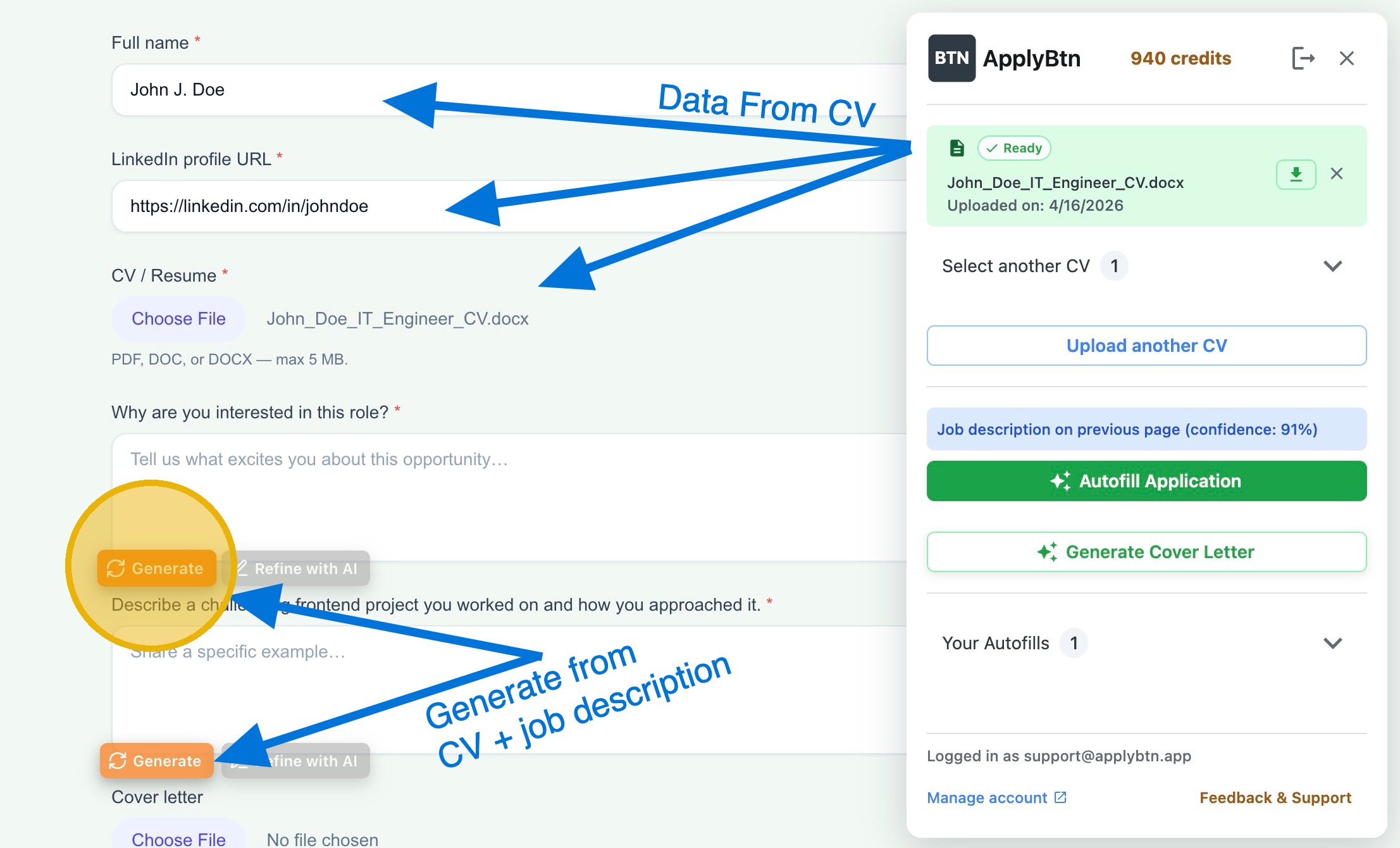
- Filling and drafting. This reads your CV and the job description, fills the repetitive fields, and drafts the answers and cover letter. It's the tedious middle - and the safest, highest-leverage part to automate.
- Submitting. Auto-apply bots send the finished application for you, in bulk, without you looking. This is where automation turns on you.
So when people ask how AI automates job applications, the honest answer is: it can automate all three, but you only want it doing the first two - and keeping your own eyes on the third.
The two kinds of automation - and only one keeps you in the running
Two words get used as if they mean the same thing, and they don't: autofill and auto-apply.
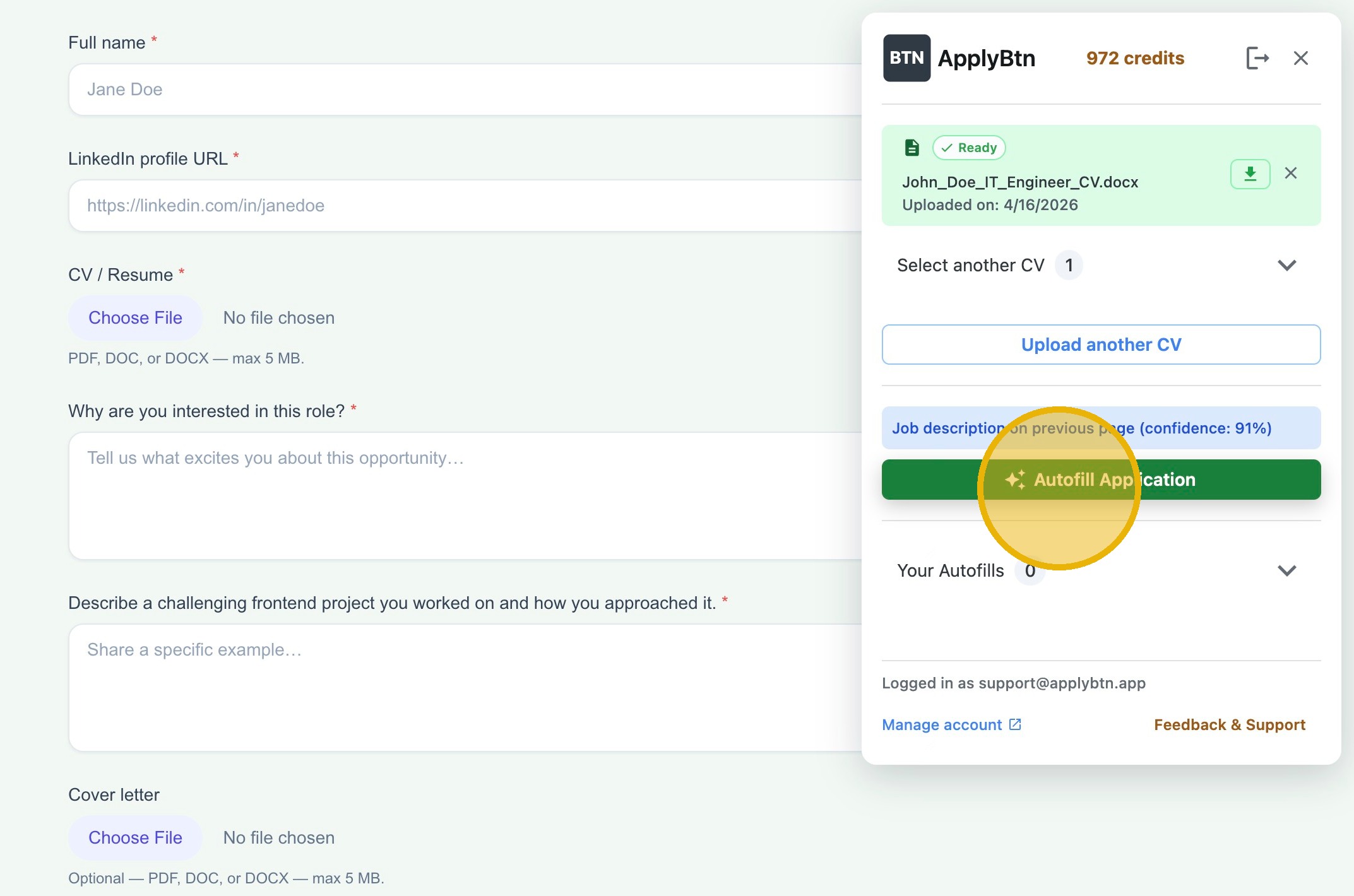
- Autofill fills the form in front of you and drafts the answers, then stops. You read it, fix it, and hit submit yourself. You apply - just far faster.
- Auto-apply submits for you, at volume, while you do something else. You trade away the review and the tailoring for raw numbers.
Everything good about automating applications lives in the first. Almost everything that gets you ignored lives in the second.
Why mass auto-apply usually backfires
The pitch sounds great: let a bot fire off hundreds of applications while you sleep. The results rarely follow.
Volume doesn't fix a low hit rate. One job seeker documented what happened when they let an AI auto-apply to 819 jobs in a single month: 71 replies and just 5 interviews - about 9% got any response, and well under 1% reached an interview (the full write-up is here). Many of those replies were automated rejections. Applying to more didn't raise the hit rate - it just produced more misses, faster.
Recruiters can tell, and it counts against you. On the hiring side, mass auto-apply is a common complaint. Recruiters describe getting waves of near-identical applications from bot services - sometimes for roles the person clearly never read. A mass-applied application tends to look mass-applied, and that's the impression your name arrives with.
It makes existing problems worse. Automation scales whatever you're already doing. If your applications aren't getting replies, a bot won't change that - it will just get you rejected more often, and faster. A weak resume or a wrong-fit target list doesn't improve at volume; it only repeats.
How to automate job applications with AI, step by step
Here's how to automate job applications with AI without giving up the part that actually gets you hired - keep yourself in the loop at the one step that matters.
- Automate the finding - optionally. Matching tools can surface roles you'd have missed; treat their picks as a shortlist, not a to-do list. Verify each job is real and worth your time before it earns a spot. There are plenty of tools to automate job applications at this stage - we compared the matching and tracking ones alongside the autofill ones in that roundup.
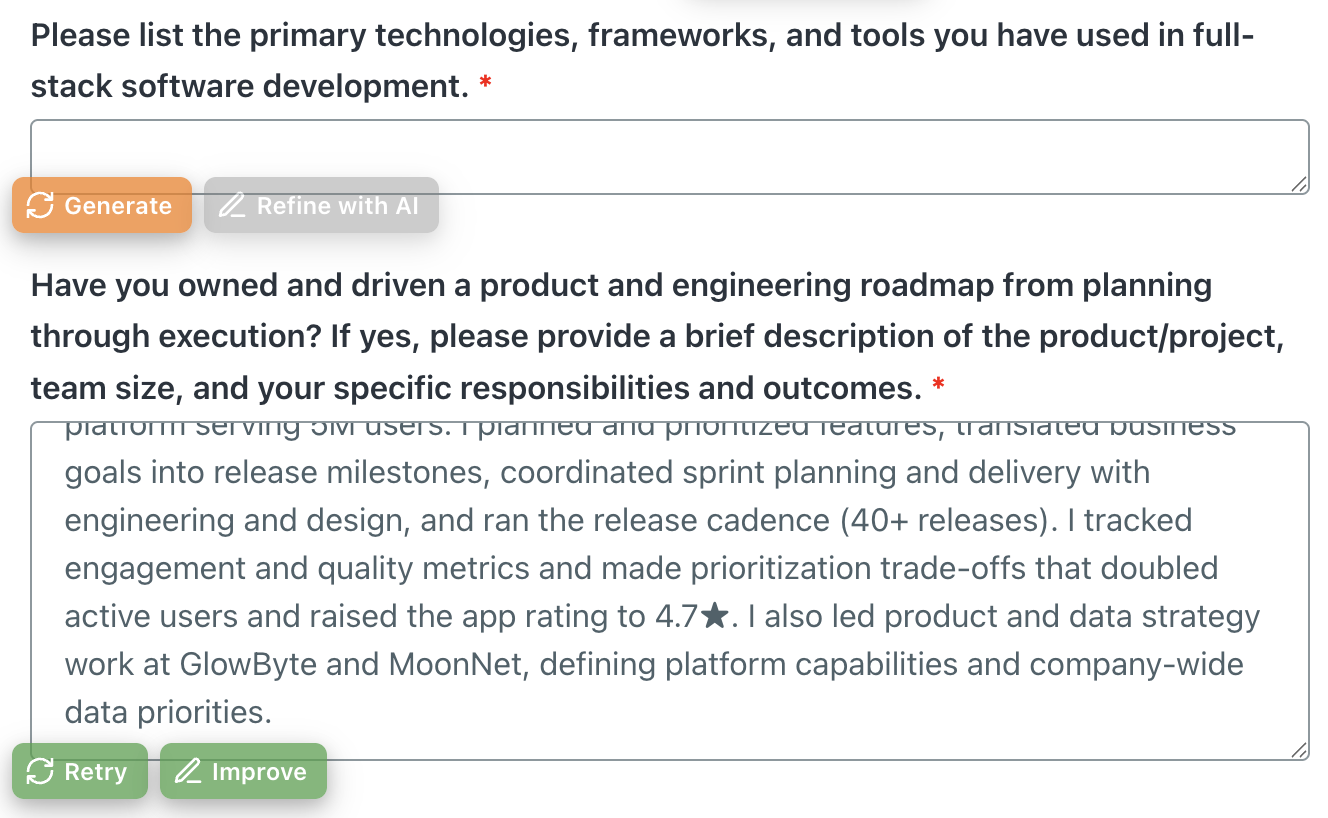
- Automate the filling and drafting - this is the real win. A job application autofill extension reads your CV and the job description right on the application page, fills the repetitive fields, and drafts the open-ended answers and the cover letter for you. This is the tedious majority of the work - the part worth automating completely. For the field-level mechanics - a master answers doc, the multi-step Workday-style wizards, what fills cleanly and what doesn't - see our tips for filling out job applications.
- Keep the review and the submit human. Read every field. Edit the drafted answers into your own voice. Confirm the screening questions match your real situation. Then you submit - not a bot. From our own experience building ApplyBtn, this last check also catches the fields autofill can't finish on its own: on multi-step ATS (applicant tracking system) forms like Workday, custom dropdowns and date or location pickers often need a human to click and type them in by hand before the form is really done.
That's the whole system: automate the typing and the blank-page problem, keep the judgment for yourself.
What to automate - and what to never automate
The tedium is the target. For most people the hard part isn't the resume or the portfolio - it's writing yet another cover letter and answering the same open-ended questions for every single application. That repetitive filling is exactly what's safe to hand off.
What to never automate:
- The final review, ever. Any factual claim - dates, titles, work authorization, notice period - gets your eyes before it ships, whether a tool drafted it or you did at 1 a.m.
- The knockout questions. The screening questions near the end ("Are you authorized to work in…?", "At least X years of experience?", "Willing to relocate?") are auto-scored - a single disqualifying answer can trigger an instant reject with no human in the loop. Never let autofill answer these on autopilot; read each one and confirm it's true.
- The jobs you actually want. For the roles you'd be gutted to lose, spend the minutes automation just saved you on the parts that get read: the open answers and the letter.
Here's the takeaway that holds up: using AI to apply faster doesn't get you hired; using it to apply better does. Automation buys you time - as long as you spend it on the applications that matter, not on firing off more of them.
Automating job applications is worth doing. Just automate the right half. Hand the repetitive filling and drafting to AI, keep the review and the send button, and you get the speed without the spray-and-pray reputation. If you want the retyping gone today, ApplyBtn autofills job applications on the page you're applying on and drafts tailored answers from your CV and the job description - you review, refine, and submit.